Pages

Sunday, March 30, 2014

Border Crossing: Colombia to Ecuador

Crossing the border between Colombia was the part of our journey we were dreading most.

After reading multiple blog posts describing bus hijackings and the dangers of traveling through this region during the nighttime, we decided to take the journey slow, traveling only during daylight hours.

Despite all the horror stories though, there was no time during our trip that we felt unsafe.

Our three day journey looked a bit like this:

Day 1
Bus from Salento to Armenia – 40 minutes
Bus from Armenia to Cali (4 hours)
Bus from Cali to Popyan (3 hours)

Day 2
Bus from Popyan to Ipiales (7 hours)

Day 3
Cab from Ipiales to the border
Get Colombian exit stamp
Walk across the border
Get Ecuadorian entrance stamp
Taxi from border to bus station in Tulcan
Bus from Tulcan to Quito

As you can see, the journey was a long (and pretty uneventful) one.

There were only a couple of notable things that happened during those long three days:

1. Several police checkpoints: picture young men – maybe 19 or 20 – dressed in camouflage gear and each carrying an AK-47 and a pistol, entering the bus to check identification of each passport. For what purpose exactly, I do not know.

2. A stunning church

Las Lajas Cathedral in the border town of Ipiales, Colombia


3. Endless hours on buses means many naps and eating only bread and jam. 


Oh, the life of a backpacker... jam sandwiches for 3 days straight.

4. One very sketchy motel in in the border town of Ipiales. Only $10 per night though. I guess you get what you pay for…

At least we only had to stay one night...?
TINY shower

Explosives & Alcohol, a Great Combination

Our time in Colombia was coming to an end, but we weren't going to leave the country without playing a game of Tejo.


Tejo is a traditional Colombian sport which involves throwing a metal disk into a clay pit filled with explosives. Our hostel told us the best, most traditional place to play Tejo was at a small bar called Los Amigos. Along with a new Canadian friend, we headed to the bar for a night that we will never forget.


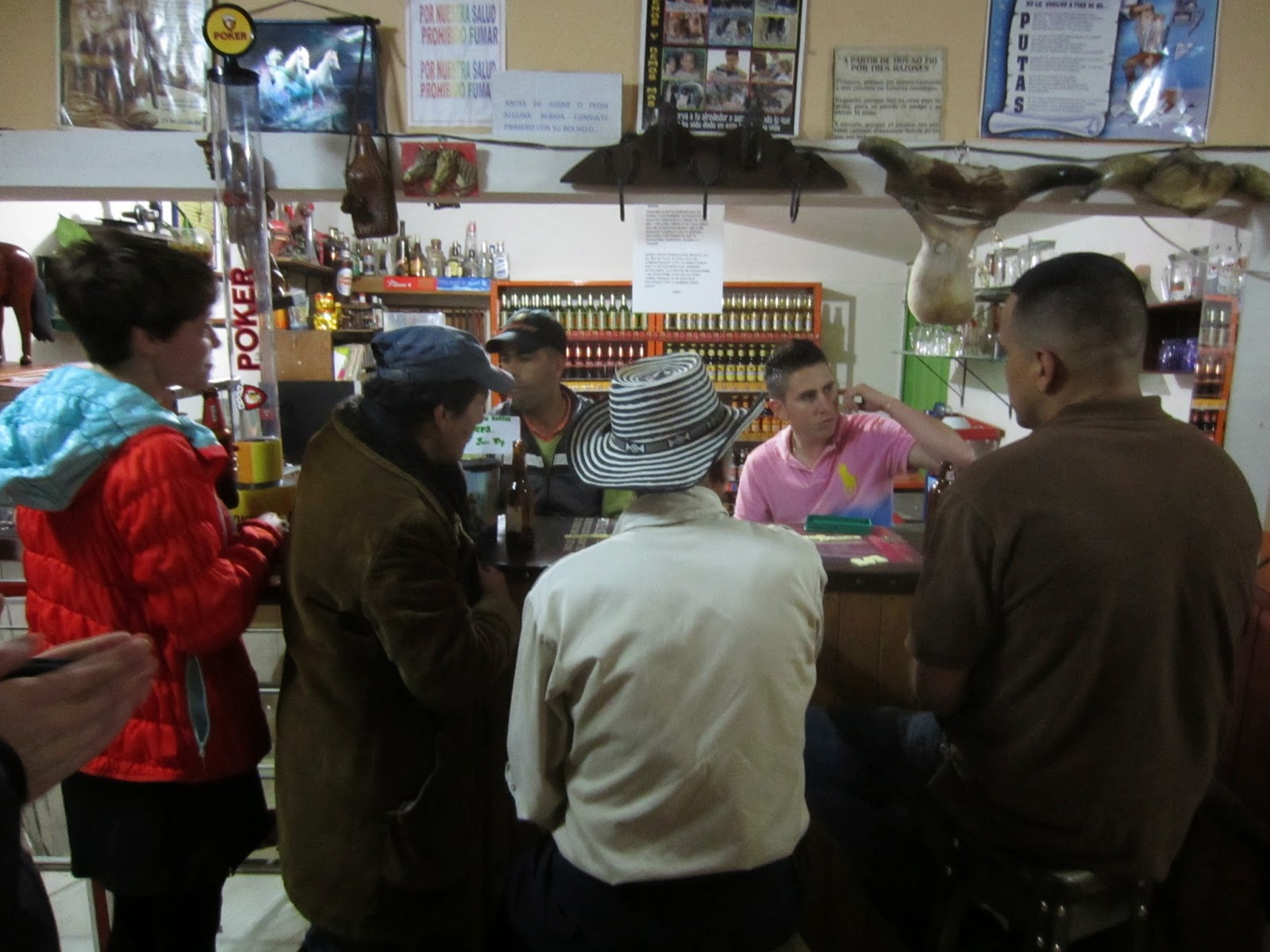
Being the only gringos in the bar, we drew lots of attention. The owner explained the game to us in Spanish, and added that it was free to play as long as you were drinking. Hmmm, great combination – explosives and alcohol!


We attempted to play, but realized it was much harder to hit the explosives than we thought. A local man, Carlos, who was watching gave us tips, and soon we invited him to join our game.


After far too long of throwing the disk and not being rewarded with any explosions, Carlos suggested we add more explosives to the pit. Soon, we got the much-anticipated BANG!

Carlos then took us to his favorite bars in town and we ordered shots of Aguadiente – a traditional Colombian liquor made with anise.


Each of these numbered folders held a record. When we requested songs, the bartender had to look up the music in a large book and pull the corresponding record. Talk about old school.
We ended the night by climbing a steep hill to a lookout of the town where we sat on swings and took in the beautiful view of the small town at night.

It was a perfect way to spend one of our last nights in Colombia before making the long journey to Ecuador.

Friday, March 14, 2014

Valle de Cocora: Hiking in the Clouds

Though hiking the Valle de Cocora was one of the things I was most looking forward to in Colombia, nothing could have prepared me for just how beautiful it would be.


We walked to the square a little past 7 in the morning, looking for a “Willy”, or Jeep, to take us to the valley where we would begin our hike. A man escorted us to a Jeep that was already packed full, and we stared at him blankly.

Does he expect us to sit on these strangers’ laps?

Seeing we were confused, he pointed to a small platform that hung out over the back tires about a foot.

We hopped up along with a Dutch guy and held on tightly to the metal bar atop the vehicle as we sped out of town.

Hang on tight!
It was at this point that I remembered reading that the ride was not a short one down the block. No, we would have to hang on like this for the next half hour.

Although it didn't seem like it at first, we actually had the best seats – or standing room – in the entire Willy. The ride was exhilarating and we got to see some incredible views as we plunged down into the valley.

Once we finally reached the starting point, we set off on a five and a half hour hike that took us through six distinctly different landscapes:

Part One: Tranquil Valley


The first forty minutes we made our way through a beautiful valley. Rain the night before made the path exceptionally muddy, but walking alongside grazing cattle and xxxx made up for the squishy journey.

Part Two: Tropical Cloud Forest


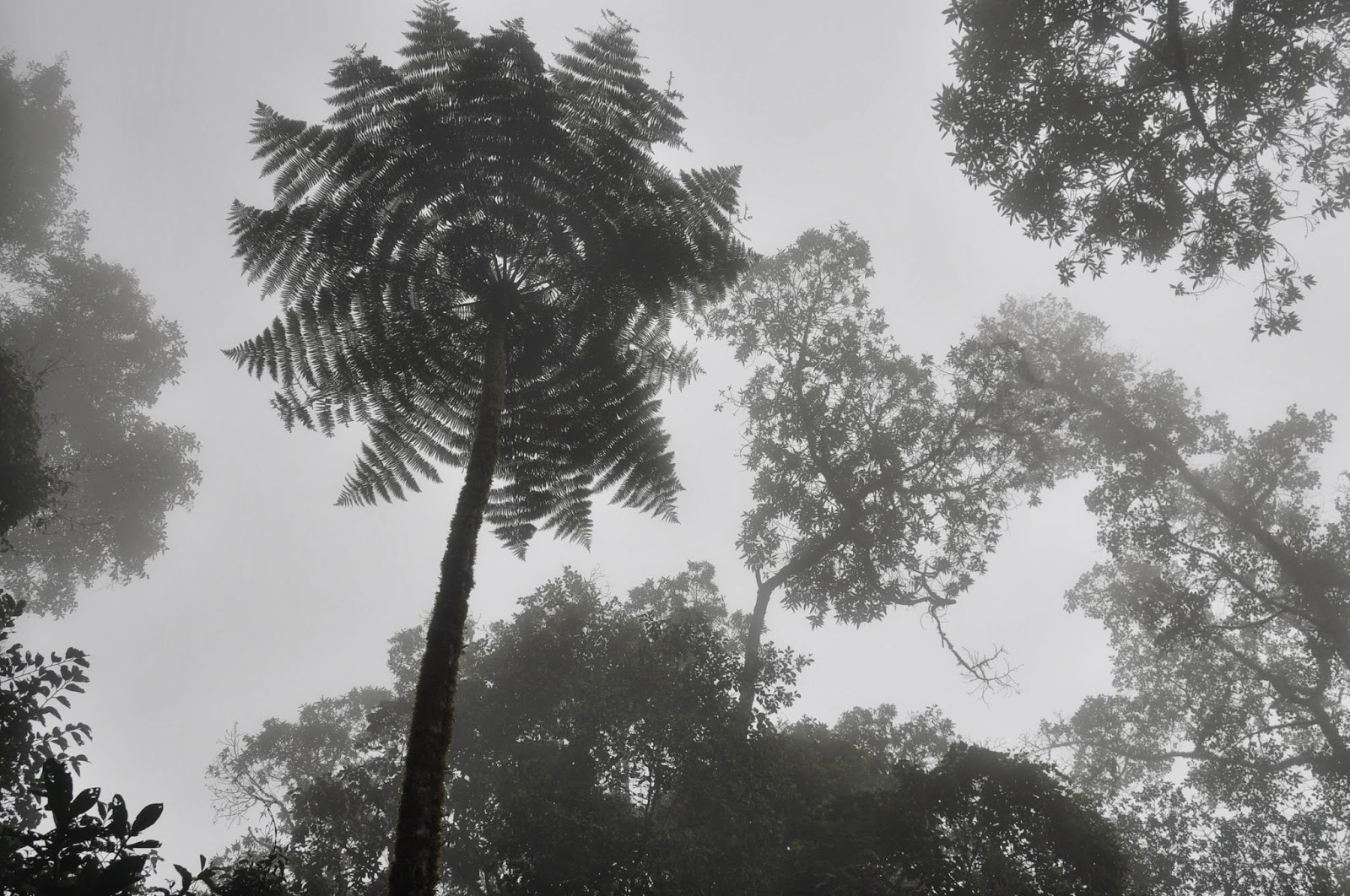
Complete with Indiana Jones-inspired bridges, colorful fauna, and moss-covered trees, it was like something you see in movies with fairies frolicking to and fro.

Part Three: Hummingbird Hideaway


We took an optional detour into a hummingbird refuge. Here, we were able to sit and watch the birds flutter and zip around at impossible speeds, all while sipping on hot chocolate and nibbling on hunks of cheese (a common pairing in this region). It was a nice break and a chance to regain energy.

Part Four: Uphill Trek


Giant leaves!
With zig-zagging trails stretching through a mountainous forest, this was the most strenuous part of the journey, but also had the best views of the landscape below.

Part Five: In the Clouds


Once we reached the top of the uphill portion, we were rewarded with a beautiful mountaintop farm in the clouds. Flowers in all colors and varieties grow alongside vegetables and fruits. After leaving the farm, we walked downhill through low-hanging clouds.

Part Six: Valley de Cocora


Palm trees began to appear one by one through the mist. With clouds hanging heavy, palm trees stretching tall, and wild horses grazing in the hilly valley, it was a scene straight out of Dr. Seuss’ The Lorax.

The palm trees in the valley are special. Known as Wax Palms, they are the tallest palm tree in the world and are exclusive to this valley.

Wax palms are a symbol of Colombia, and are even pictured on the currency.
It was without a doubt one of the most insanely beautiful places I have ever seen.
I took 431 pictures that day – I just couldn't control myself!

After reaching the end of the hike, our rumbling tummies led us to a restaurant in the valley. We ordered the famous local trucha, or trout, and enjoyed every bite. The coral flesh and taste reminded us more of salmon than trout, but it was delicious. Served atop a giant platano – thinly smashed plantain, with rice and a salad, we were stuffed even though we shared one plate. (The portions here are HUGE!)

Trucha (doesn't photograph well, but it was DELICIOUS!)
After lunch, we tried to catch a Willy back to town. The thing we didn't realize about the Willys is that they only leave once they are completely full. That meant the two of us would have to wait for 6 more people to finish their hike, or we would have to pay for all their fares. Lucky for us, we didn't have to wait long.

This time we sat in the back of the Jeep, and it’s a good thing we did. We didn't just pack it full with 8 people, which would be full capacity. No, our driver was a bit of an over-achiever. We squished that Jeep full of 15 people before embarking on the half hour journey back to Salento. 

More pictures from our hike: (It was hard to choose just a few!)

Instead of hiking, some people rode horses through the valley.


Salento: In the Heart of Colombia’s Coffee Region


If you love coffee as much as Ben and I do, you know that Colombia is one of the premiere sources of our favorite caffeinated beverage.


In the center of Colombia, there is a region known as Efe Cafetera, or to foreigners “the Coffee Zone”. This area’s climate of mild temperatures throughout the year paired with lots of rain creates perfect growing conditions for – you guessed it – coffee.

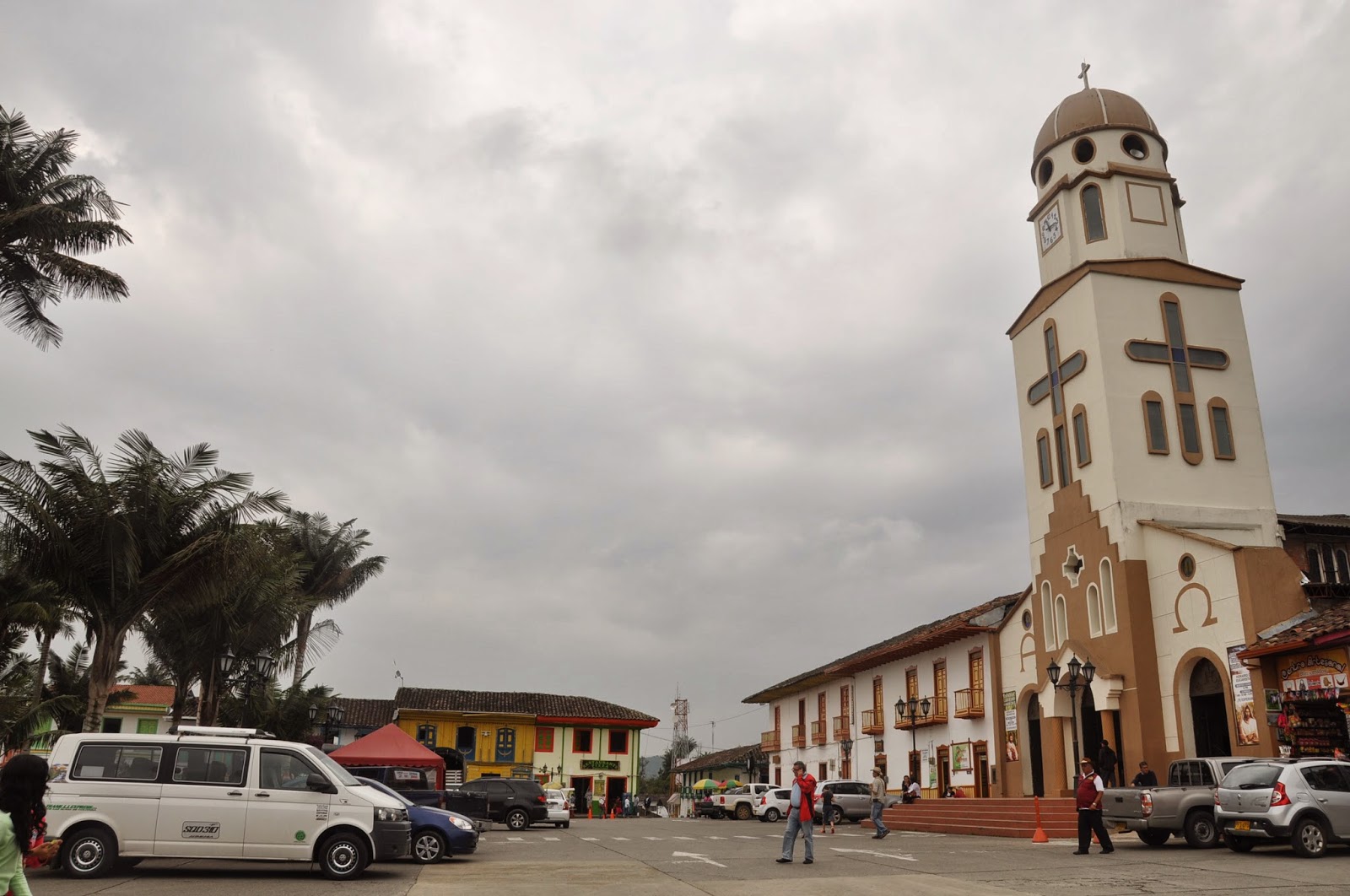
After exploring the large and bustling cities of Cartagena and Medellin, we were ready to find some peace in a small town. In lieu of staying in one of the three major cities known for exporting coffee, we spent four glorious nights in a quaint little village named Salento.


Located in lush green mountains, Salento is a true Paisa village. Lining the streets are businesses and homes with brightly colored doors, and men wear traditional wool ponchos and cowboy hats.

Ponchos, ponchos everywhere!

Salento, above all else, is known for its coffee farms.

During our first day, we decided to take a tour of one of the small coffee farms near town. The hour long walk with views of the valley below was absolutely­­­­ stunning.


Ocaso Coffee Farm
When we arrived at the farm, we took a tour of the property – learning how the red and yellow berries are grown, harvested and processed. The tour was given in Spanish, and with my limited knowledge of the language, I wasn't able to pick up every minute detail. I did, however, learn there is a massive amount of effort that goes into creating the perfect cup of coffee.

Picking my own coffee beans


At the end of the tour we enjoyed a mug of our very own brew. Muy delicioso!


Salut!
More pictures from Salento:

Our beautiful hostel in Salento


The most scenic bus stop I have ever seen.

Ben needs some coffee!